
← All services · X-ray, CT, MRI
Kidney CT scan (for stones)
kidney stone CT · CT KUB · CT urogram · low-dose CT for kidney stones
Quick cross-section images of your kidneys and urinary tract. Even very small stones show up.
For kidney colic, blood in the urine, possible stones, or to check after stone treatment.
⏱ Duration: usually 5 to 10 minutes in the room; the report the same day, quickly if you have colic
Be sure to tell your doctor
How to prepare
- Without contrast. Usually no prep. Sometimes you are asked to come with a full bladder. Check with the clinic.
- With contrast. Usually no food for 3 to 4 hours. Water is fine. A creatinine blood test is often needed.
- Clothing. No metal on the belly or lower back.
What to bring
- Your referral
- Past kidney ultrasounds and CT scans
- A creatinine test, if asked
How it goes
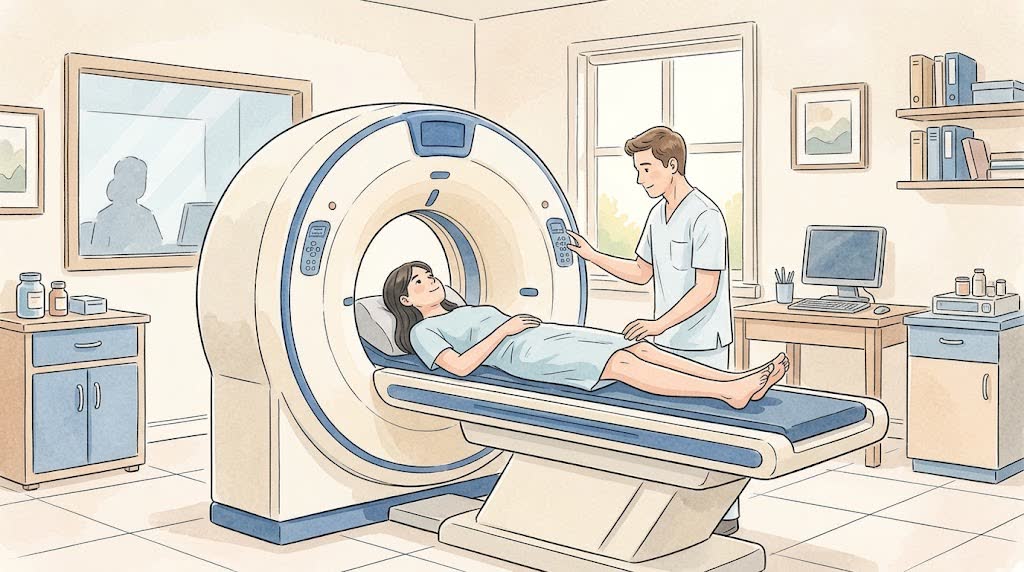
- You lie on the table, and the technician helps you get comfortable
- The table moves into the wide ring of the scanner
- Keep still, and sometimes hold your breath on command
- If contrast is used, it goes into a vein and images are taken with pauses
What you'll feel
- It does not hurt. The scanner hums quietly
- The ring is wide, so it does not feel cramped
- With contrast: warmth through the body and a feeling as if you wet yourself. This is normal and passes quickly
Afterwards
- You can go back to your day right away
- Drink water, unless your doctor limited it
- Take the report to a urologist
Contact a doctor straight away if
- Severe pain in your side that does not go away, a fever over 38°C (100.4°F), chills, or vomiting: call emergency services
- After contrast: itching, a rash, a swollen face, or trouble breathing. Tell the staff right away or call emergency services
Common questions
Why CT and not ultrasound for stones?
CT sees almost all stones, even small ones, and shows their exact size. Ultrasound is done first, CT for accuracy.
Is there a lot of radiation?
A lower dose is often used for stones. Your doctor orders CT when the benefit outweighs the risk.