
← All services · X-ray, CT, MRI
CT scan of the abdomen with contrast
abdominal CT · CT abdomen and pelvis · CAT scan with contrast · contrast CT
A CT scan shows the organs in your belly in thin slices. Contrast dye given into a vein makes blood vessels and organs easier to see.
For belly pain, to look for tumors or stones, after an injury, and to check how treatment is working.
⏱ Duration: 15 to 30 minutes in the scan room, sometimes longer if you need to drink contrast first
Be sure to tell your doctor
How to prepare
- Food. Usually no food for 4 to 6 hours. Water is fine. Your clinic will give you the exact time.
- Contrast drink. Sometimes you are asked to drink a contrast liquid 1 to 2 hours before the scan. If so, come early.
- Metal. Wear clothes with no metal around your belly. You will remove belts and jewelry.
What to bring
- Your referral
- Your creatinine blood test, if you were asked for one
- Past CT, MRI, or ultrasound scans
How it goes
- A thin tube called a cannula is put into a vein in your arm
- You lie on the table with your arms above your head
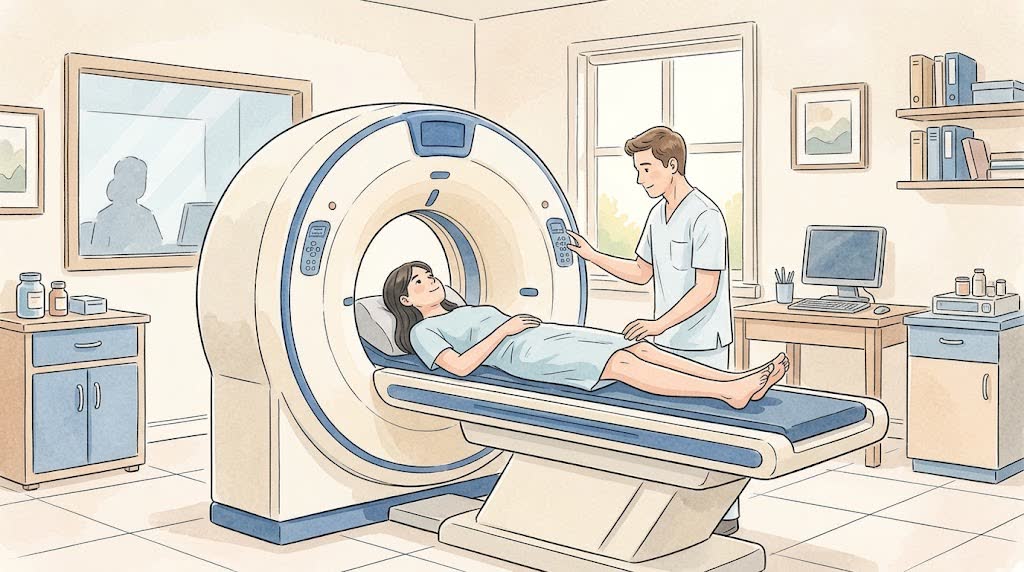
- The table moves through a wide ring. The first scans are without contrast
- When asked to breathe in and hold, you hold your breath for a few seconds
- The contrast is given, and more scans are taken
What you'll feel
- When the contrast goes in, you may feel a warm wave through your body, a metal taste, or a feeling that you need to pee. This is normal and passes in about a minute
Afterwards
- The cannula is removed. You may be asked to wait at the clinic for 15 to 30 minutes
- Drink extra water that day, unless your doctor says otherwise
- The report usually comes in 1 to 2 days
Contact a doctor straight away if
- Itching, rash, a swollen face, or trouble breathing: tell staff right away, or call emergency services if you are already home
Common questions
How much radiation is in a CT scan?
More than a regular X-ray, but the dose is set for the task. When the scan is medically needed, the benefit is greater than the risk.