
C-reactive protein (CRP)
CRP · C-reactive protein test · inflammation blood test · high-sensitivity CRP
A blood test from a vein. It shows if there is inflammation in your body and how strong it is.
For fever, a suspected infection, joint pain, or to check how treatment works. High-sensitivity CRP is sometimes ordered to check the risk of heart disease.
⏱ Duration: the blood draw takes 2 to 3 minutes; results usually in 1 day
Be sure to tell your doctor
How to prepare
- Food. The test is usually done in the morning on an empty stomach, or 3 to 4 hours after a light meal. Check with your clinic.
- The day before. No fatty food, alcohol, or hard workouts.
- Water. You can drink plain water.
What to bring
- Your referral, if you have one
- Past CRP results, to compare
How it goes
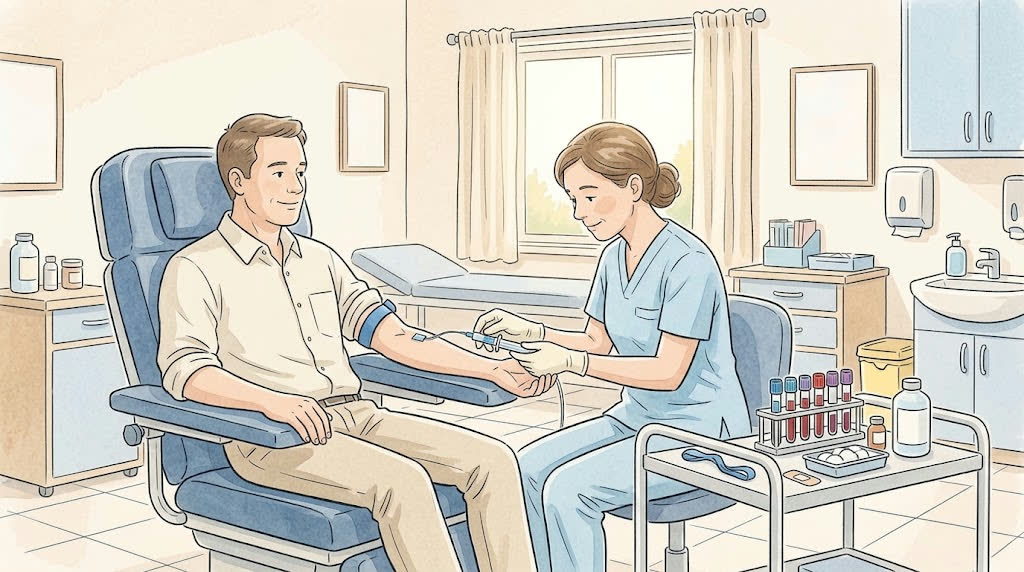
- You sit down and rest your arm on a support
- A band is tightened above your elbow
- The skin is wiped with alcohol
- Blood is taken into a tube with a needle
- A cotton pad is pressed on the spot
What you'll feel
- A quick prick
- If you are scared or feel dizzy, say so. You can lie down
Afterwards
- Keep the cotton pad pressed for 3 to 5 minutes
- You can eat right away
- Your doctor will explain the result. The number alone is not a diagnosis
Common questions
What does a high CRP mean?
It means there is inflammation in your body. The doctor looks for the cause. It may be a cold, an infection, or something else.
How is CRP different from ESR?
CRP rises faster and falls faster. That is why it is easier to track inflammation with it.