
Heart ultrasound for children (echocardiogram)
pediatric echocardiogram · child heart ultrasound · kids' echo · echo for children
The doctor uses ultrasound to look at your child's heart: how it is formed and how the valves and walls work. It is safe and painless.
For a heart murmur, at the routine 1-month checkup, for shortness of breath, getting tired fast, or changes on an ECG.
⏱ Duration: usually 15 to 30 minutes; the report is ready right away
Be sure to tell your doctor
How to prepare
- Prep. Usually none. Your child can eat and drink.
- Calm. Feed your baby before the scan. A full baby lies still more easily.
- Clothing. Comfortable clothes that are easy to take off on top.
What to bring
- The referral
- Past ECGs and echocardiograms
- A sheet
- A pacifier, a bottle, or a cartoon, to distract your child
How it goes
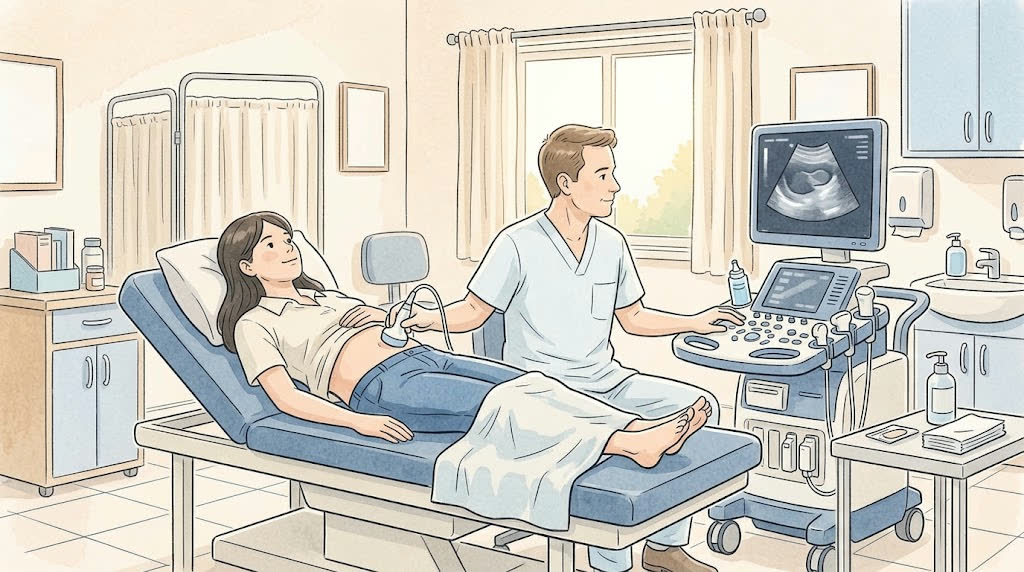
- Your child lies on their back, and you stay close
- Gel is put on the chest
- The doctor moves the probe over the chest, sometimes under the ribs and above the collarbone
- Sometimes ECG stickers are put on the chest
- The gel is wiped off with a tissue
What you'll feel
- Cool gel and light pressure
- Babies may cry. The doctor needs your child to lie still, so sometimes there are pauses
Afterwards
- You can go back to your usual day right away
- The report is usually ready right away
- Go over the results with your pediatrician or a pediatric cardiologist
Contact a doctor straight away if
- Blue lips, your child is struggling to breathe, or faints: call emergency services
Common questions
Does a heart murmur mean a heart defect?
Most murmurs in children are harmless. The echo shows if there is a problem.
Does my child need a sedative?
Usually not. Feeding, a toy, or a cartoon helps.