
Urodynamic testing
urodynamics · urodynamic study · cystometry · bladder function test
A machine measures how your bladder fills and empties. For this, a thin catheter with a sensor is placed in the bladder.
For urine leaks, frequent urges, a weak stream, and before bladder or prostate surgery.
⏱ Duration: usually 30 to 60 minutes; you usually get the findings the same day
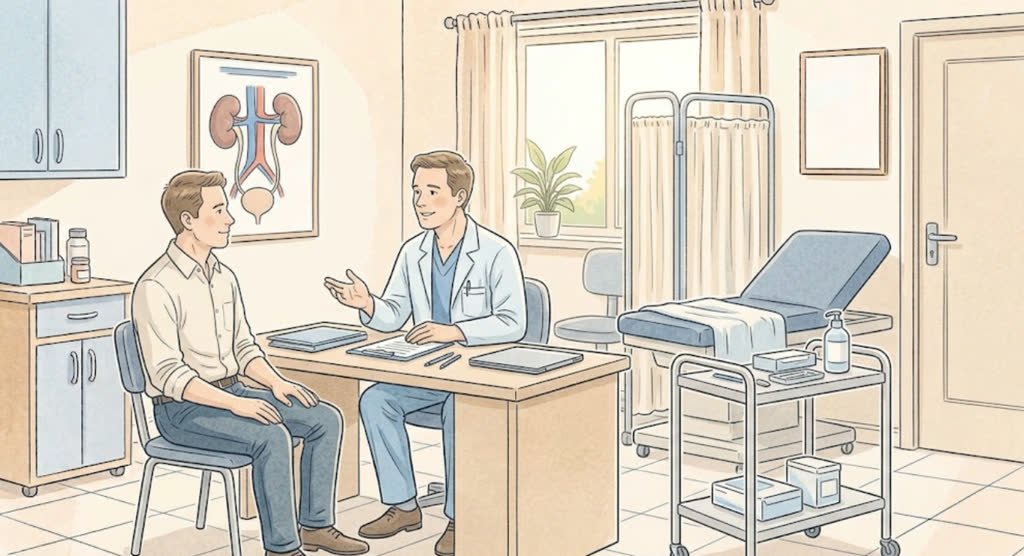
Be sure to tell your doctor
How to prepare
- Diary. You are often asked to record for 2 to 3 days when and how much you drink and pee. Check with the clinic.
- Urine test. A recent urine test is often needed to rule out infection.
- Bladder. Come with a full bladder. At the start, you will be asked to pee into a special device.
- Medicines. Do not stop them on your own. If your doctor says to pause, they will tell you for how long.
What to bring
- Your referral
- Your bladder diary
- Urine test results
- Spare underwear
How it goes
- You pee into a special toilet that measures your stream
- You lie down or sit in a chair
- A thin catheter with a sensor goes into the bladder, and another into the rectum
- The bladder is slowly filled with sterile fluid
- You tell the doctor when you feel the urge to pee
- At the end, you pee while the machine records the pressure
What you'll feel
- An unpleasant feeling as the catheters go in
- A strong urge at the end of filling. That is expected
- It may feel awkward. Staff are used to it
Afterwards
- Drink more water that day, unless your doctor says otherwise
- Mild burning when peeing for 1 to 2 days can happen
- Your doctor will discuss the results with you at your visit
Contact a doctor straight away if
- A fever over 38°C (100.4°F) or chills
- You cannot pee
- Blood in your urine for more than a day
Common questions
Will it hurt?
Usually not. The catheters are thin. It may be unpleasant and awkward, but not for long.
What if I leak during the test?
That is normal and even useful for the test. Staff are ready for it.