
Urine test
urinalysis · urine sample · routine urine test
You collect morning urine in a small container at home and bring it to the lab. It shows how your kidneys work and whether there is inflammation.
For checkups, pain in the lower belly or lower back, frequent or painful urination, pregnancy, and diabetes.
⏱ Duration: collecting takes 2 to 3 minutes at home, and results usually come the next day
Be sure to tell your doctor
How to prepare
- Container. Get a sterile container from a pharmacy or the lab. Do not use a food jar.
- The day before. Do not eat beets or foods that color your urine. No alcohol or hard workouts. Drink as usual.
- In the morning. Wash with warm water, without scented soap. Women should cover the vaginal opening with a cotton ball.
- Collecting. You need the first morning urine, from the middle of the stream: first few seconds into the toilet, then into the container, and the end into the toilet again.
What to bring
- The container with urine, tightly closed and labeled
- Your referral
How it goes
- In the morning, after washing, start passing urine into the toilet
- Without stopping the stream, hold the container under it
- Fill the container about halfway
- Finish in the toilet and close the lid tightly
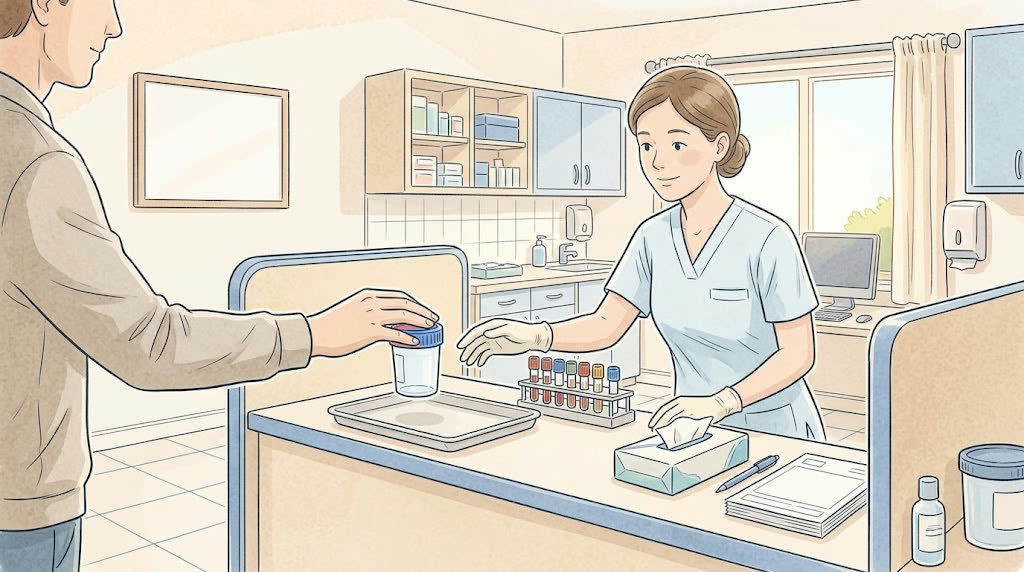
- Take it to the lab within 1 to 2 hours
What you'll feel
- Nothing
Afterwards
- A doctor explains the result
- If changes are found, you are often asked to repeat the test
Contact a doctor straight away if
- Blood in your urine, or strong lower back pain with a fever: see a doctor right away
Common questions
Can I give a urine sample during my period?
Better not. Blood gets into the sample. The test is usually moved to 2 to 3 days after your period ends.
Can I collect urine the night before?
No. You need fresh morning urine, and it must reach the lab within 1 to 2 hours.