
Stress echocardiogram
stress echo · exercise echocardiogram · stress echocardiography · dobutamine stress echo
The doctor does a heart ultrasound at rest and right after exercise: on a treadmill, a bike, or with medicine. It shows if your heart gets enough blood when it works hard.
For chest pain, to check the heart's arteries; after treatment of the heart arteries; or to check the valves under stress.
⏱ Duration: usually 45 to 60 minutes; the report is usually ready the same day
Be sure to tell your doctor
How to prepare
- Food. A light meal 2 to 3 hours before the test. Do not come hungry or very full.
- Medicines. Some heart medicines are sometimes paused for a short time. Do not stop them on your own. Your doctor decides.
- Coffee and smoking. On the test day, usually no coffee, strong tea, or smoking. Check with the clinic.
- Clothing. Sportswear and comfortable shoes for walking.
What to bring
- Your referral
- Past ECGs and echocardiograms
- A list of your medicines
- Sports shoes and water
- A towel
How it goes
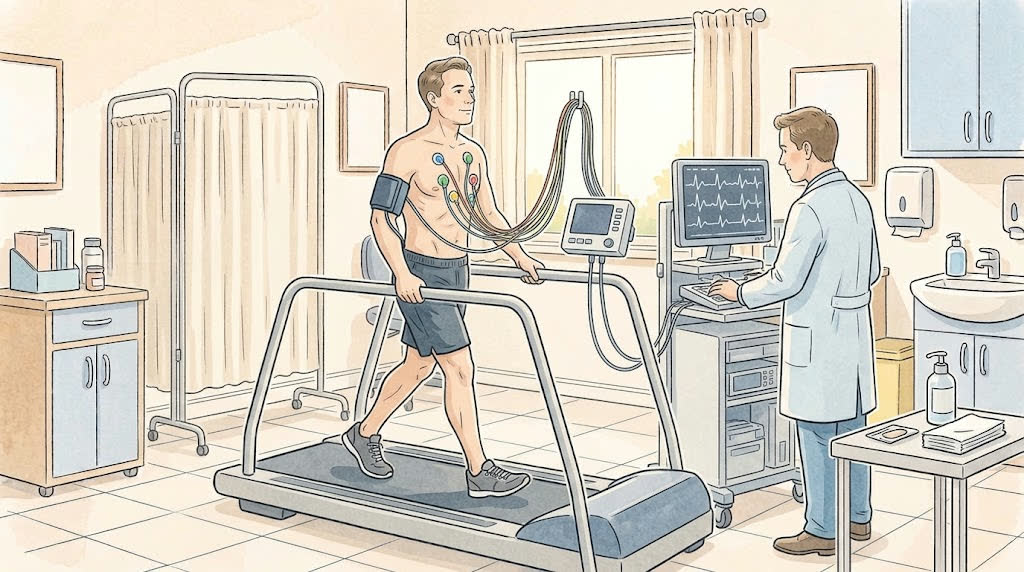
- ECG stickers are put on your chest and a blood pressure cuff on your arm
- The doctor does a heart ultrasound at rest
- You walk on a treadmill or pedal a bike, and the load slowly goes up
- Sometimes medicine is given into a vein instead of exercise
- Right after exercise, you lie down and the doctor quickly repeats the ultrasound
- Then you rest until your pulse and blood pressure return to normal
What you'll feel
- You will get tired, and your pulse and breathing will speed up. This is expected
- Speak up right away if you have chest pain, strong shortness of breath, or dizziness. The test will be stopped
Afterwards
- After resting, you can go back to your usual day
- The report is usually ready the same day
- Go over the results with a cardiologist
Contact a doctor straight away if
- Chest pain that does not go away after the test: tell the doctor right away or call emergency services
- Fainting, strong shortness of breath, or skipped heartbeats
Common questions
Is it dangerous for the heart?
The test is done under a doctor's watch, with everything for help nearby. It is stopped at the first warning signs.
What if I cannot walk for long?
Say so in advance. The stress can be done with medicine, without walking.