
Sedation (medicine-induced sleep)
sedation · being put to sleep for a procedure · IV sedation · twilight sedation
Medicine is given into a vein and you fall into a light sleep. The procedure goes calmly, and you usually do not remember it.
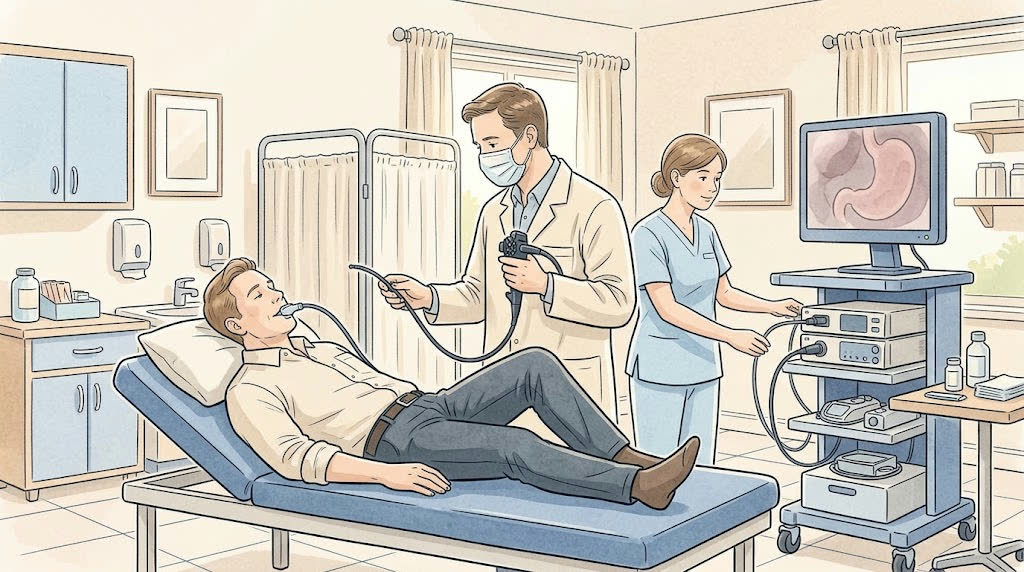
So a test or procedure can be done without fear or discomfort. For example, a gastroscopy or a colonoscopy.
⏱ Duration: sedation lasts as long as the procedure, and waking up usually takes 30 to 60 minutes
Be sure to tell your doctor
How to prepare
- Food. Usually no food for 6 hours. Clear water is fine until the time your clinic tells you.
- Medicines. Tell the doctor what you take. They will decide what to take in the morning.
- Someone with you. You cannot drive after sedation. Arrange for someone to pick you up.
- Clothes. Wear comfortable clothes. Take off jewelry and contact lenses.
What to bring
- Your referral
- A list of your medicines
- Your ID
- Someone to take you home
How it goes
- A small tube is put into a vein, and a sensor is clipped on your finger
- A nurse or anesthetist gives you the medicine
- Within a minute, you fall asleep
- Your breathing and pulse are watched during the procedure
- You wake up and rest in a recovery room until you feel yourself again
What you'll feel
- Slight warmth or burning in the vein as the medicine goes in
- Sleepiness after you wake up
- Sometimes slight dizziness. It passes
Afterwards
- Do not drive for the rest of the day
- Do not sign important papers or make big decisions until the next day
- You can eat and drink when the doctor says it is OK
- It is best to have someone with you until the evening
Contact a doctor straight away if
- Trouble breathing or chest pain: call emergency services
- Strong sleepiness that does not go away for several hours
Common questions
Is sedation the same as general anesthesia?
Not quite. The sleep is light, and you breathe on your own. It is gentler than general anesthesia.
Why can't I drive after sedation?
The medicine slows your reactions for several more hours, even if you feel fine.