
Pap test (cervical smear)
Pap smear · cervical smear · cervical screening · smear test
The gynecologist takes cells from your cervix with a soft brush. They are checked under a microscope to find early changes that could turn into cancer.
For regular cervical cancer screening, and if past tests showed changes. Often done together with an HPV test.
⏱ Duration: the test itself takes 1 to 2 minutes, and results usually take 1 to 2 weeks
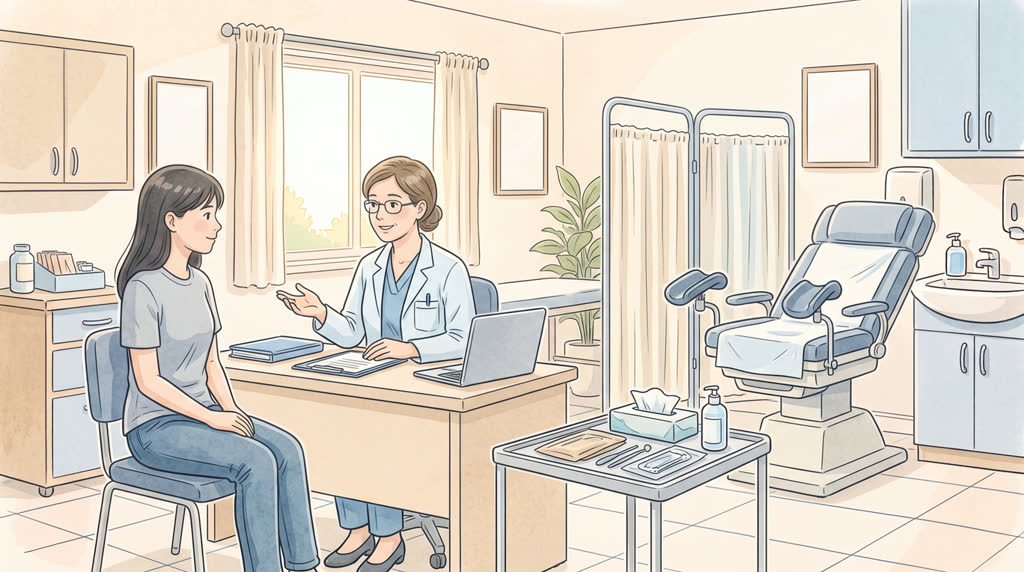
Be sure to tell your doctor
How to prepare
- Your cycle. Not during your period. The middle of your cycle is usually best. Check with your doctor.
- 2 days before. No sex, douching, suppositories, creams, or vaginal tablets.
- Exams. If you recently had an exam with gel or a colposcopy, tell your doctor. The smear is sometimes moved to another day.
What to bring
- Your referral
- Past smear results
- A pad for afterward
How it goes
- You undress below the waist and lie on the exam chair
- The doctor gently inserts a disposable speculum
- A soft brush collects cells from your cervix. It takes a few seconds
- The sample goes into a small jar with liquid or onto a glass slide
- The speculum is removed
What you'll feel
- Pressure from the speculum
- A brief pulling feeling when the cells are taken
Afterwards
- Light spotting during the day is normal
- If the result shows changes, the doctor will order a repeat test or an exam. This does not mean you have cancer
- Your doctor will tell you how often to repeat it, based on the screening program
Contact a doctor straight away if
- Strong pain or heavy bleeding after the test: see a doctor or call emergency services
Common questions
How often do I need a Pap test?
Usually every 3 to 5 years, depending on your age and your HPV test results. Your doctor will tell you your schedule.
Does an abnormal Pap test mean cancer?
Usually not. More often it is cell changes that are easy to treat. That is what screening is for.
Does a Pap test hurt?
Usually not. It is unpleasant, but quick. Relax and breathe calmly.