
INR test on warfarin
INR test · PT/INR · prothrombin time · warfarin blood test · clotting test
This blood test shows how fast your blood clots. Your doctor uses it to set your warfarin dose.
Regularly while you take warfarin: more often at the start, then usually every few weeks.
⏱ Duration: the blood draw takes a few minutes; results usually come the same day
Be sure to tell your doctor
How to prepare
- Warfarin. Take it as usual, at your usual time. Do not change the dose yourself before the test.
- Food. Usually you do not need to fast, but it is best in the morning before a big breakfast. Check with your clinic.
- Records. Keep a log: date, dose, and INR result. Bring it with you.
What to bring
- Your test request form
- Your ID
- Your INR and warfarin dose log
How it goes
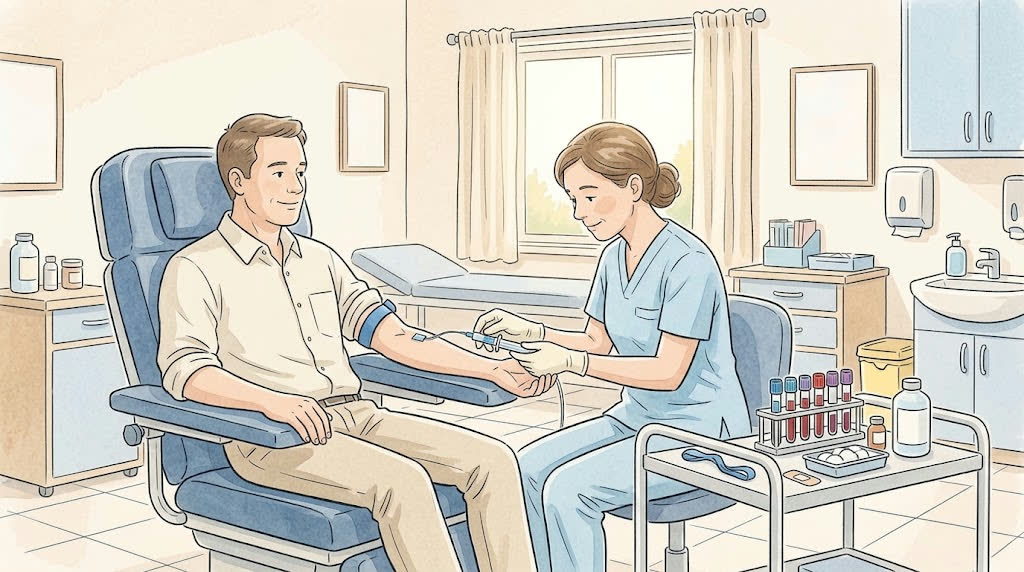
- Blood is taken from a vein, or sometimes from a fingertip with a quick-test device
- From a vein: a band is tightened and there is a quick prick
- From a finger: a small prick, and a drop of blood is taken
- A cotton pad is pressed on the spot
What you'll feel
- A quick prick, like a pinch
Afterwards
- Press the cotton pad longer, 5 to 10 minutes. On warfarin, bleeding stops more slowly
- Your doctor will tell you the result and your new dose
- Write the result in your log
Contact a doctor straight away if
- Black stools, blood in urine or vomit, or a nosebleed that will not stop: call emergency services
- A sudden severe headache, or weakness in an arm or leg: call emergency services
- Many bruises for no reason: see a doctor in the next few days
Common questions
How often do I need an INR test?
Often at first, while the dose is being set. Then usually every few weeks. Your doctor will give you a schedule.
Can I eat greens on warfarin?
Yes, but about the same amount every day. Sudden diet changes change your INR.