
Children's eye exam
pediatric eye exam · children's eye doctor · kids vision test · pediatric ophthalmologist
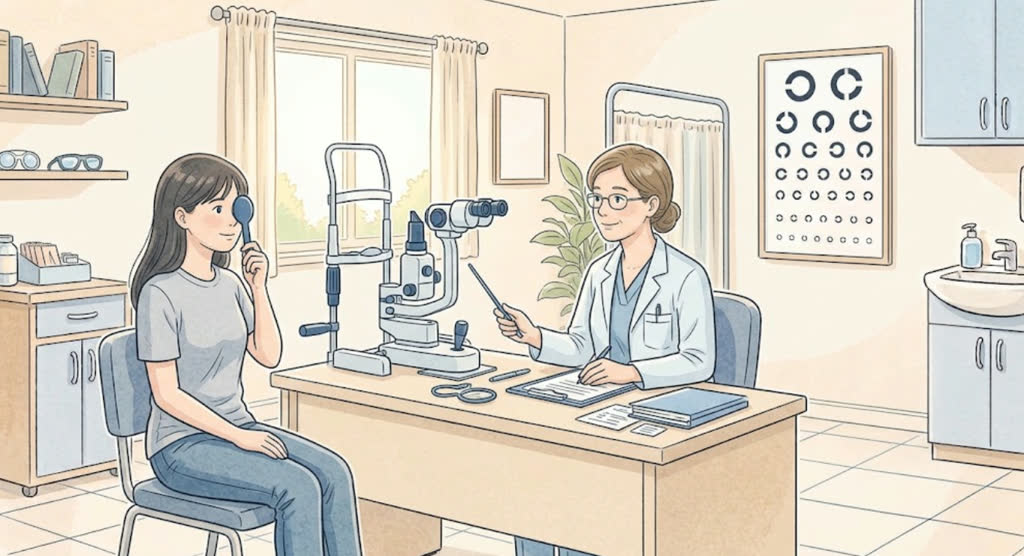
The doctor checks how well your child sees and examines the eyes. For little ones, pictures and toys are used.
For routine checkups, or if your child squints, sits close to things, has a turning eye, or complains about their eyes.
⏱ Duration: usually 15 to 30 minutes; with dilating drops, up to 1 to 1.5 hours
Be sure to tell your doctor
How to prepare
- Timing. Choose a time when your child is not hungry or sleepy.
- Talk to your child. Tell your child it will be a game with pictures and a little flashlight.
- Drops. If dilating drops are used, vision will be blurry for a few hours afterward. Plan your day.
What to bring
- Your child's documents
- Your child's glasses, if they have them
- A toy or a snack
How it goes
- The doctor asks about your concerns
- Your child names pictures or letters on a chart
- Each eye is checked in turn, with the other covered
- A machine measures how the eye focuses, without touching it
- Sometimes drops are put in, and you wait 20 to 40 minutes
- The doctor looks into the eyes with a light and a lens
What you'll feel
- The exam does not hurt
- The drops may sting a little
- After the drops, light seems bright and close-up vision is worse. This passes in a few hours
Afterwards
- If drops were used, a cap or sunglasses help outdoors
- The doctor will say if glasses are needed and when to come back
Contact a doctor straight away if
- The eye turns red and painful after the drops, or your child cannot open it: see a doctor
Common questions
At what age is vision checked?
The first exam is usually in the first months of life, then at routine checkups.
Why use drops?
The drops relax the eye muscles, so the doctor can see more exactly if glasses are needed.
My child does not know letters. How will they be tested?
For little ones, there are picture charts and machines that need no answers.