
ESR (sed rate)
ESR · sed rate · erythrocyte sedimentation rate
This is a simple blood test. It shows how fast blood cells settle in a tube. It is a general sign of inflammation.
Usually together with a complete blood count: at a checkup, or for fever, joint pain, or weakness.
⏱ Duration: the blood draw takes a few minutes; results usually come the next day
Be sure to tell your doctor
How to prepare
- Food. Best in the morning before eating, or a few hours after a light meal. Check with the lab.
- The day before. For 24 hours, no alcohol and no hard workouts. Best not to smoke in the morning.
- Medicines. Do not stop them on your own. Tell your doctor what you take. They will decide if anything should change.
What to bring
- Your test request form
- Your ID
How it goes
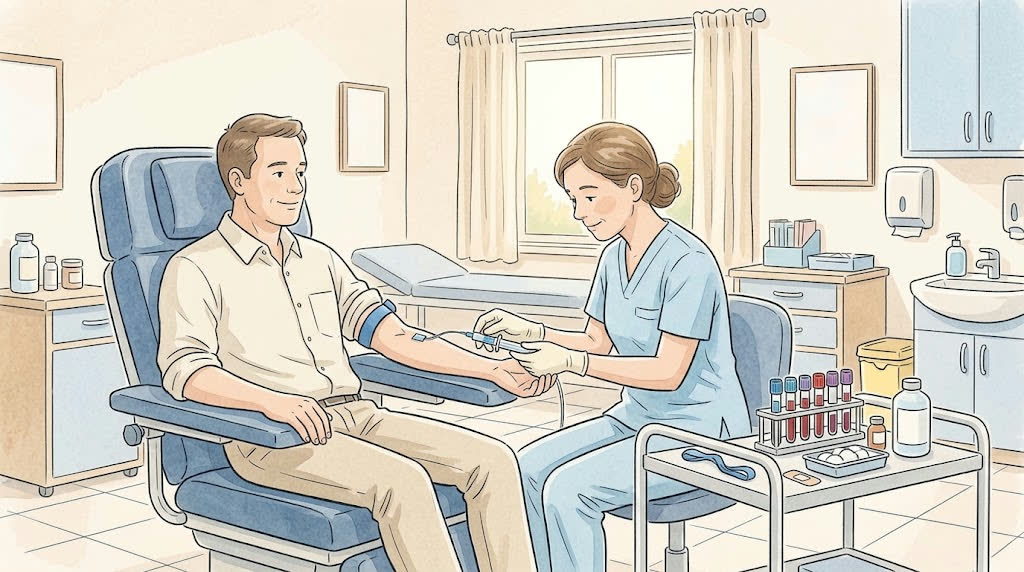
- Blood is usually taken from a vein, sometimes from a fingertip
- A band is tightened above your elbow
- The skin is wiped with antiseptic
- A quick prick, and blood fills a tube
- The needle comes out, and a cotton pad is pressed on the spot
What you'll feel
- A quick prick, like a pinch
- Sometimes slight dizziness. Tell the nurse
Afterwards
- Press the cotton pad for 3 to 5 minutes and keep your arm straight
- You can eat right away and go back to your usual day
- Results usually come in 1 day. The lab will tell you when
Common questions
Is a high ESR dangerous?
It is only a general sign. A cold, pregnancy, and age can raise it. Your doctor looks at it with other tests.
Why does ESR stay high after an illness?
It goes back to normal slowly, sometimes over several weeks. Your doctor will order a repeat test.