
Echocardiogram (heart ultrasound)
echocardiogram · echo · heart ultrasound · cardiac echo
An ultrasound that shows your heart moving: how the chambers and valves work, and how strongly your heart pumps.
For heart murmurs, shortness of breath, swelling, high blood pressure, and before surgery or sports.
⏱ Duration: usually 20 to 40 minutes
Be sure to tell your doctor
How to prepare
- Preparation. None needed. You can eat and drink.
- Clothes. Wear something comfortable. You will undress to the waist. Women should avoid a one-piece bodysuit.
What to bring
- Your referral
- Past ECGs and echocardiograms, if you have them
How it goes
- You undress to the waist and lie on your left side
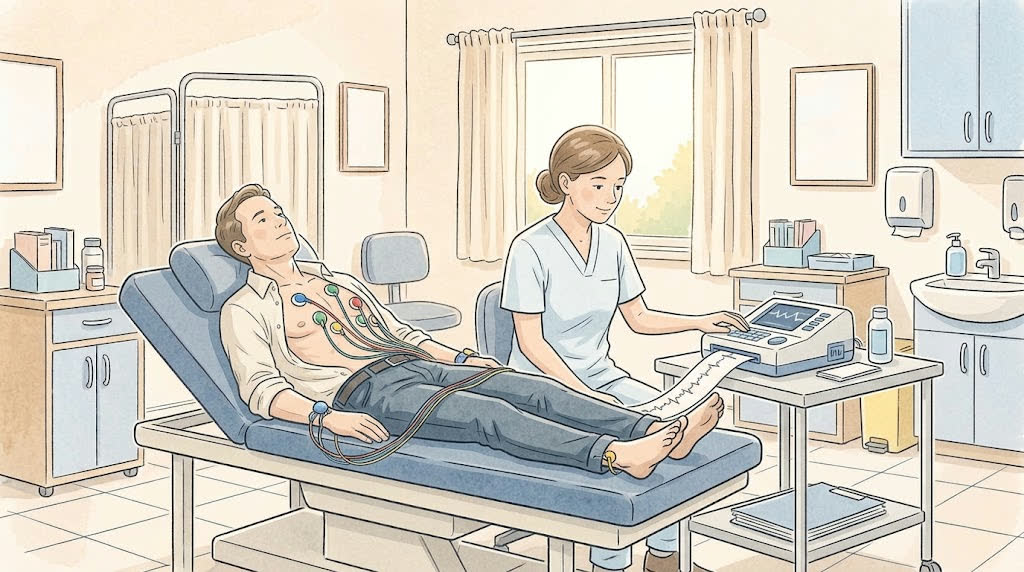
- ECG pads are stuck on your chest
- Gel is put on, and a probe is placed on your chest in different spots
- Sometimes you are asked to hold your breath
What you'll feel
- The probe presses on your chest. It is a bit uncomfortable, but not painful
- You may hear the sound of blood flow. This is normal
Afterwards
- The gel is wiped off
- The report is usually ready right away or the same day
Common questions
How is an echo different from an ECG?
An ECG records your heart's electrical activity. An echo shows its structure and movement.