
Dilated eye exam
dilated eye exam · eye dilation · retina exam · fundus exam · ophthalmoscopy
The doctor puts in drops to widen your pupils. This gives a better view of the retina at the back of the eye.
For diabetes, high blood pressure, nearsightedness, flashes or floaters, and routine checkups.
⏱ Duration: usually 30 to 60 minutes including waiting for the drops; vision stays blurry for another 4 to 6 hours
Be sure to tell your doctor
How to prepare
- Getting there. After the drops, you cannot drive for a few hours. Come with someone or take a taxi.
- Your day. For a few hours it will be hard to read or look at screens. Plan your day.
What to bring
- Sunglasses
- Your glasses and ID
- Someone to drive you, if you usually drive
How it goes
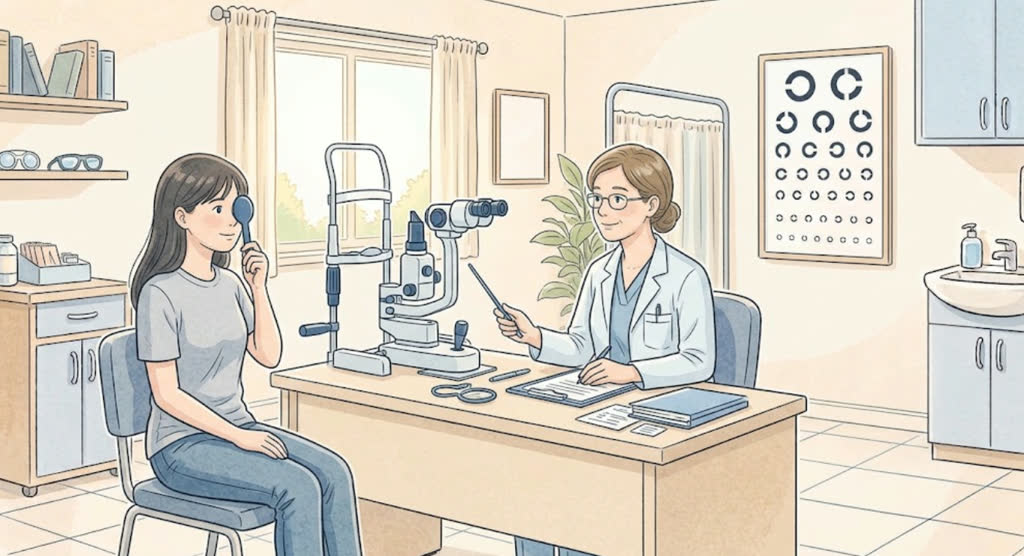
- The doctor checks your vision and eye pressure
- Drops are put in
- You wait 20 to 40 minutes for the pupils to widen
- The doctor shines a light in your eye and looks through a lens
- You are asked to look in different directions
What you'll feel
- The drops sting a little
- The bright light is unpleasant, but brief
- For a few hours, close-up vision is blurry and light feels glaring
Afterwards
- Do not drive until your vision is back to normal
- Wear sunglasses outdoors
- If you wear contacts, put them back in when your doctor says
Contact a doctor straight away if
- Severe eye pain, headache, nausea, and rainbow rings around lights after the drops: see an eye doctor urgently or call emergency services
Common questions
How long do the pupils stay wide?
Usually 4 to 6 hours, sometimes up to a day.
Can I work afterward?
Usually yes, but reading and screens will be hard for a few hours.