
D-dimer
D-dimer test · blood clot test · DVT blood test
This is a blood test from a vein. It helps show whether there are fresh blood clots in your blood vessels.
For a possible clot in the leg or lungs, sometimes in pregnancy, after surgery, or with some illnesses.
⏱ Duration: the blood draw takes a few minutes; results usually come the same or the next day
Be sure to tell your doctor
How to prepare
- Prep. Usually nothing special. Best fasting or a few hours after a light meal. Check with the lab.
- Medicines. Do not stop them on your own. Tell your doctor what you take. They will decide if anything should change.
What to bring
- Your test request form
- Your ID
How it goes
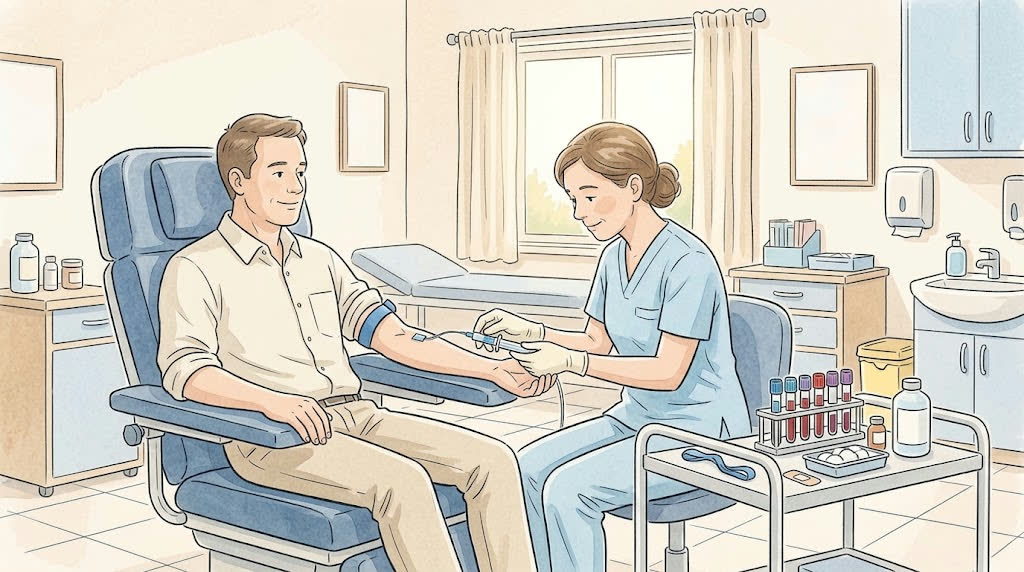
- You sit down and rest your arm on the armrest
- A band is tightened above your elbow
- The skin is wiped with antiseptic
- A quick prick, and blood fills a tube
- The needle comes out, and a cotton pad is pressed on the spot
What you'll feel
- A quick prick, like a pinch
- Sometimes slight dizziness. Tell the nurse
Afterwards
- Press the cotton pad for 3 to 5 minutes and keep your arm straight
- You can eat right away and go back to your usual day
- Results usually come in 1 day. The lab will tell you when
- A high D-dimer is not a diagnosis. The doctor may order a vein ultrasound or other tests
Contact a doctor straight away if
- Sudden shortness of breath, chest pain, or coughing up blood: call emergency services. Do not wait for the test
- One leg suddenly swells, turns red, and hurts: see a doctor the same day
Common questions
Does a high D-dimer mean I have a clot?
Not necessarily. It goes up in pregnancy, with inflammation, after surgery, and with age. Your doctor decides.
Why do this test if I feel fine?
Sometimes it is ordered for monitoring, for example in pregnancy. Ask your doctor why.