
Cavity treatment
filling · tooth filling · cavity filling
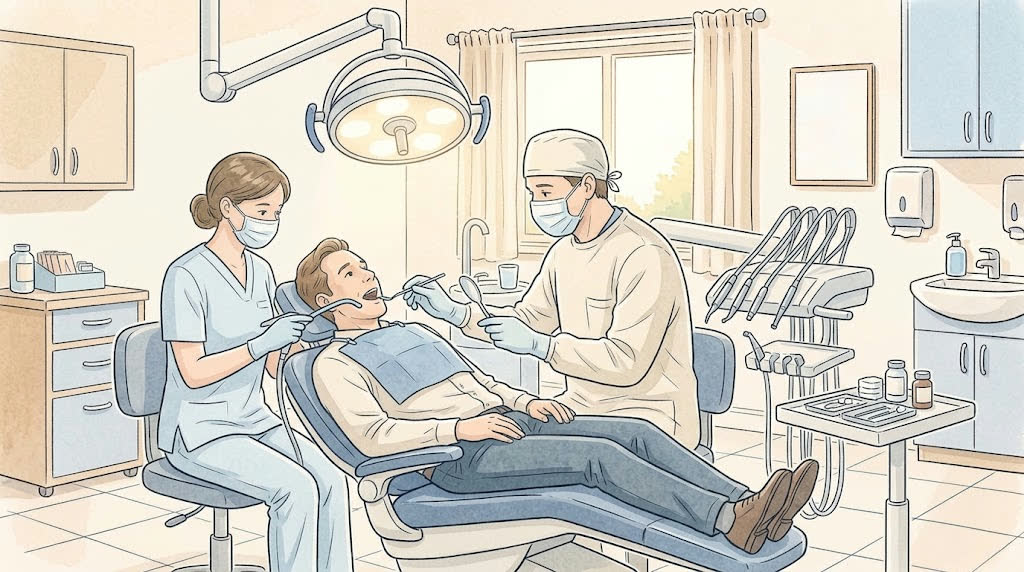
The dentist removes the decayed part of the tooth and fills the hole with a filling. This is usually done with a numbing shot.
When a tooth has a cavity, meaning decay of the enamel and the tissue under it. It shows up on an exam or an x-ray.
⏱ Duration: usually 30 to 60 minutes per tooth
Be sure to tell your doctor
How to prepare
- Food. Eat 1 to 2 hours before your visit. After the numbing shot, eating will be hard.
- Teeth. Brush your teeth before your visit.
What to bring
- Dental x-rays, if you have them
How it goes
- The dentist checks the tooth and takes an x-ray if needed
- You get a numbing shot. In a few minutes, the tooth and lip go numb
- Sometimes the tooth is covered with a thin rubber sheet to keep it dry
- A dental drill removes the decay
- The hole is filled in layers, and each layer is hardened with a light
- The filling is polished, and your bite is checked
What you'll feel
- The shot is quick. After that, the tooth does not hurt
- Noise and buzzing from the drill, and pressure on the tooth
- If it hurts, tell the dentist. You will get more numbing medicine
Afterwards
- While your lip and cheek are numb, usually 2 to 3 hours, do not eat. You could bite your cheek
- A filling hardened with a light is hard right away. For other fillings, the dentist will tell you when to eat
- For a few days, the tooth may be sensitive to cold
- If the filling feels high when you bite, come back to have it adjusted
Contact a doctor straight away if
- Swelling of the cheek or gum, or a fever
- Strong, throbbing pain that does not go away and gets worse
Common questions
Can I have dental treatment while pregnant?
Yes, usually, and it is best not to leave a cavity untreated. Tell the dentist how far along you are. They will choose a safe numbing medicine.
Why does my filling hurt after treatment?
Some sensitivity for a few days is normal. If the pain is strong or getting worse, see your dentist.