
Blood chemistry test
blood chemistry · metabolic panel · liver function test · kidney function test
A blood test from a vein that shows how your liver, kidneys, and metabolism are working. Your doctor chooses which values to check.
For checkups, liver and kidney disease, diabetes, before surgery, and to track treatment.
⏱ Duration: the blood draw takes 3 to 5 minutes; results usually come in 1 to 2 days
Be sure to tell your doctor
How to prepare
- Food. Usually strictly fasting: no food for 8 to 12 hours. Plain water is fine. Check with the lab.
- The day before. Eat a light dinner with no fatty food. For one day before, no alcohol and no hard workouts.
- In the morning. Do not smoke. Do not drink tea, coffee, or juice, and do not chew gum.
- Medicines. Do not stop them on your own. Ask your doctor whether to take your morning medicines before or after the test.
What to bring
- Your referral with the list of tests
- Your ID
- Past results, to compare
How it goes
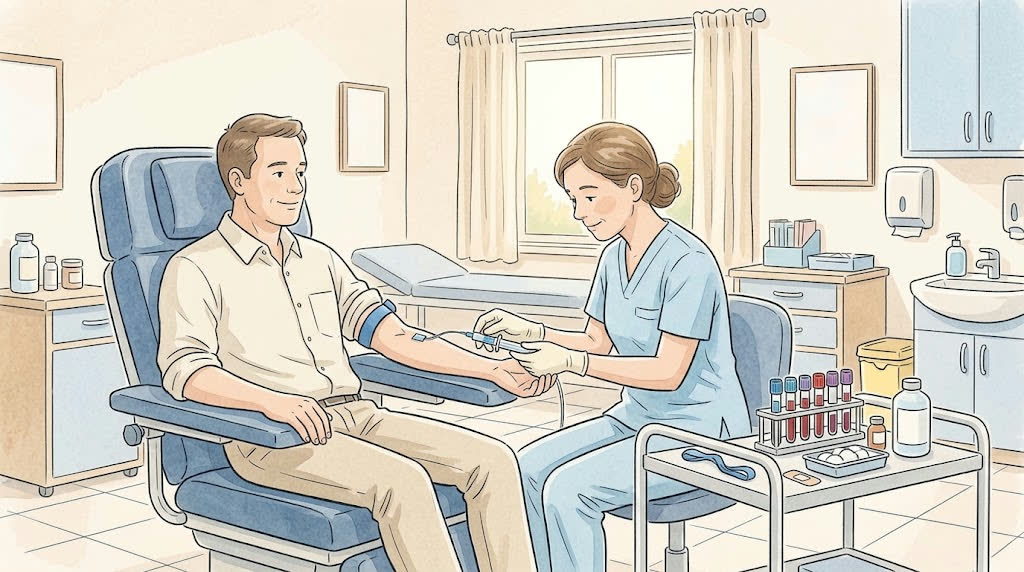
- You sit down and rest your arm on the armrest
- A band is tied above your elbow
- The skin is cleaned with antiseptic
- A quick prick, and blood fills the tube
- The needle is removed, and a cotton pad is pressed on the spot
What you'll feel
- A quick prick
- Sometimes slight dizziness. Tell the nurse
Afterwards
- Press the cotton pad for 3 to 5 minutes
- You can eat right after the test
- Your doctor explains the results. One number out of range is not a diagnosis
Common questions
Why must I fast for blood chemistry?
Food changes your sugar, fats, and other values. A test after breakfast may show false results.
What does blood chemistry include?
There is no single set. It usually includes liver tests, creatinine, sugar, protein, and cholesterol. Your doctor decides the list.